Showing posts with label Documents. Show all posts

October 19, 2010

Washington Reports The Surrender at Yorktown

The last major battle of the American Revolutionary War ended on 19 October 1781 when Lieutenant General Lord Cornwallis surrendered at Yorktown, Virginia to a combined force from the Continental and French armies under the command of General George Washington.

Here's a letter that General Washington wrote to tell congress about the victory, from The Papers of the Continental Congress on Fold3:
Washington Informs Congress of the Victory at Yorktown

And here are a few other interesting items related to the Battle of Yorktown from the Papers of the Continental Congress:


A list of clothing and other goods taken from the British captives.


An accounting of the prisoners by rank and unit.


A copy of the terms of the surrender.

July 20, 2010

The 20 July Plot

On July 20, 1944 a group of German military leaders launched a failed attempt to blow up Adolf Hitler and remove the Nazis from power.

For years, officers of the German military had been conspiring to overthrow Hitler and other assassination attempts had been made, but the 20 July plot seems to have been the most elaborate and well thought out.

The plot has inspired several books and movies, including the 2008 film Valkyrie which stars Tom Cruise as Count Claus von Stauffenberg, the man who planted the bomb intended to blow up Hitler and then returned to Berlin to help with the coup that was to follow.

The WWII Foreign Military Studies on Fold3 include some interesting information about the 20 July plot including...

A description of the plot by Otto Ernst Remer, leader of the home guard units that helped put down the coup attempt:


A description of the impact of the failed plot by Percy Ernst Schramm, professor of medieval and modern history at the University of Goettingen, formerly Major in the Reserve Corps, and officer in charge of keeping the war diary of the Wehrmacht Operations Staff:


Ludwig Kaiser's report on the events leading up to coup attempt, which he calls the Goerdeler Movement after Carl Friedrich Goerdeler who would have served as the chancellor of the new government if the plot had succeeded. Kaiser's report begins with the German government's official statements on the plot and proceeds to describe events and discussions that lead of the 20 July:


This YouTube video provides a brief overview of the events and this one includes the audio of the speech Hitler gave after the attempt on his life. You can see some pictures and learn all sorts of details from this Wikipedia page.

December 4, 2009

The Gunboat Philadelphia

The National Museum of American History's website has this nice page about the Continental Gunboat Philadelphia.

The Gunboat Philadelphia is the oldest surviving American fighting vessel. Built in 1776, it was sunk in Lake Champlain during a naval battle with the British in the same year. The Continental Congress authorized the building of this 54 foot, 29-ton gunboat and eight other similar vessels for the defense of the Champlain Valley - the northern frontier of the colonies considered the key to the success or failure of the American Revolution. In the summer of 1776, under the leadership of the charismatic and controversial Brigadier General Benedict Arnold, Philadelphia and her sister-ships were hurriedly organized into what historians consider “the first American Navy.”
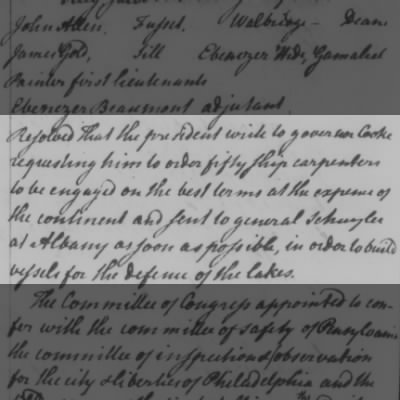
Here's the page from Transcript Journals of the Continental Congress (part of the Papers of the Continental Congress) where congress resolves, "that the president write to governor Cooke requesting him to order fifty ship carpenters to be engaged on the best terms at the expense of the continent and sent to general Schuyler at Albany as soon as possible, in order to build vessels for the defense of the lakes."
Continental Congress hires carpenters "to build vessels for the defense of

You can find some nice pictures of the Philadelphia here and more information about the history of the ship here.

December 3, 2009

UFO Sightings

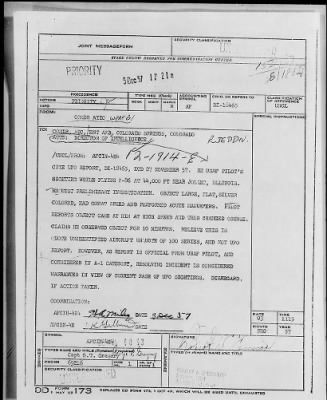
Today's Document of the Day from NARA is UFO report from the Project Blue Book files.

Here's the image on Footnote where you'll find the other 31 pages of the report:
Page 5; Project Blue Book, 1947-1969

Project Blue Book is full of interesting and mundane reports. Names of people reporting the sightings have been redacted, so you aren't likely to find out if your mother reported a flying saucer, but it's interesting to see the kinds of things that were reported, the way the government collected the data and in many cases, the way they explained the various sightings.

Here are a few other interesting reports from Project Blue Book.

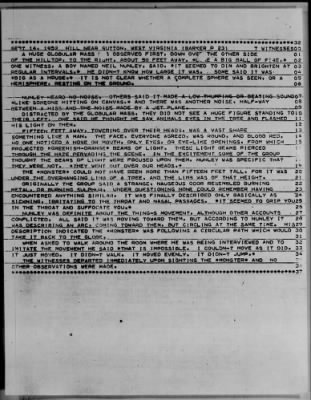
A first hand report of the Flat Woods Monster,
Page 17; Project Blue Book, 1947-1969

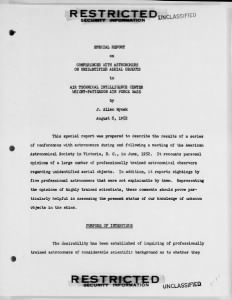
A "Special Report on Conferences with Astronomers on Unidentified Aerial Objects,"
Page 39; Project Blue Book, 1947-1969

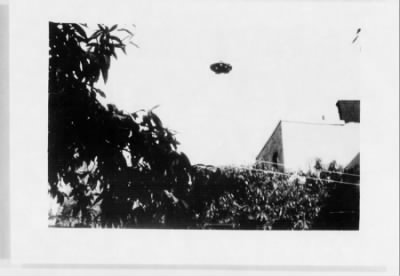
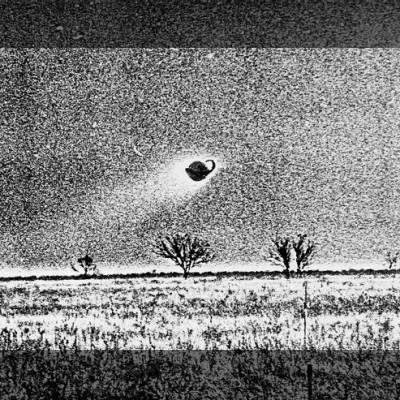
And the occasional picture of an unidentified flying object:
new york agosto 67

UFO or Photographic anomaly?

I don't know that you'll find proof of alien life in Project Blue Book, but looking for it can be a lot of fun.

November 20, 2009

Using Revolutionary War Pension Files

A nice post on the NARAtions blog today discusses the value of pension files and links to an interesting example from Footnote.

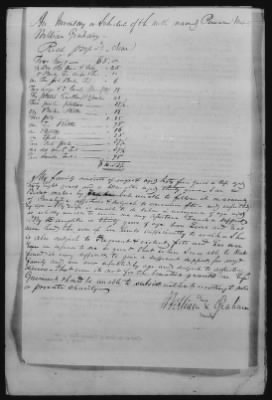
William Graham was 64 years old when he submitted this document in support of his Revolutionary War pension application in 1820. The pension laws in effect then required him to prove not only his service, but also his need for monetary support. The inventory seen here lists his personal property.

Page 8; Revolutionary War Pension and Bounty-Land Warrant Application Files

November 19, 2009

Remembering the Gettysburg Address

Today is the 146th anniversary of the Gettysburg Address.

This brief speech contains what may be Abraham Lincoln's most memorable mistake, "The world will little note, nor long remember what we say here."

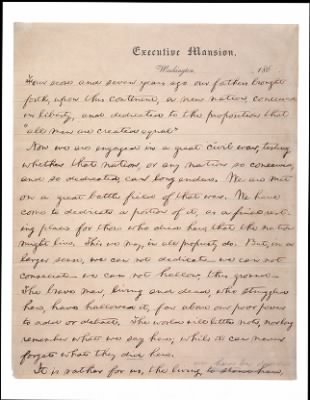
Page 1; American Milestone Documents

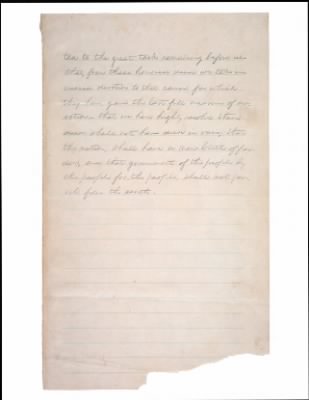
Page 2; American Milestone Documents


Here's my transcription of this early draft:
Four score and seven years ago our fathers brought forth, upon this continent, a new nation, conceived in liberty, and dedicated to the proposition that "all men are created equal."

Now we are engaged in a great civil war, testing whether that nation, or any nation so conceived and so dedicated, can long endure. We are met on a great battle field of that war. We have come to dedicate a portion of it, as a final resting place for those who died here, that the nation might live. This we may, in all propriety do. But, in a larger sense, we can not dedicate...we can not consecrate...we can not hallow this ground. The brave men, living and dead, who struggled here, have hallowed it, far above our poor power to add or detract. The world will little note, nor long remember what we say here, while it can never forget what they did here.

It is rather for us, the living, we here be dedicated to the great task remaining before us... that from these honored dead we take increased devotion to that cause for which they here, gave the last full measure of devotion—that we here highly resolve these dead shall not have died in vain, that this nation, shall have a new birth of freedom, and that government of the people, by the people, for the people, shall not perish from the earth.


It's interesting to compare this with the address Lincoln gave (here's the version on the Lincoln Memorial) and see how he worked through the details.

October 17, 2009

Doctored Photos

Here's an interesting Time article about doctored photos starting with an example from the Brady Collection.

A while back, Blake found and interesting example of photo doctoring on Footnote.

Here's a picture of Omaha beach after the D-day invasions, scanned from a mounted card in NARA's image collection:
Page 44; Black and White and Color Photographs of U.S. Air Force and Predecessor Agencies...

The planes at the top add to the excitement, but it looks like they were added to the picture. Here's what appears to be the same picture, but without the planes flying overhead:
D-Day Omaha Beach June 1944.jpg


Update [Oct 21, 2009]: The New York Times is running a seven part series by Errol Morris exploring the manipulation of photos.

October 14, 2009

Cataloging a Stolen Heritage

As Allied forces made their way into Germany toward the close of World War II in Europe, US Zone Commanders were instructed to impound certain types of artifacts that the German Reich, Nazi Party and others had taken from individuals and institutions in Germany and countries they had occupied.

The army set up temporary collecting points for the various types of impounded items and then cataloged the collections as they tried to find out where things belonged.

At NARA, the records of these looted items are grouped as the “Ardelia Hall Collection” because Ardelia Hall, the US State Department’s Arts and Monuments Adviser worked extensively with the records from 1954 to 1961.

You can read more details about the collecting points, the process of sorting through the arifacts and the Ardelia Hall collection here.

The other day, I found some interesting things while poking around the Wiesbaden Property Cards from the Ardelia Hall Collection in Footnote's Holocaust Collection (the Ardelia Hall titles are included in a group called Holocaust Era Assets).

Most of the material at the Wiesbaden Collection point came from German holdings, like these from the Staatliche Museen in Berlin:


But, some of the works cataloged at Wiesbaden we presumed taken from other countries, like this work by Taesler which may have been from Russia :

Other works came from individuals, like this scene painted by Kobell which may have belonged to Siegfried Reiss:

In many cases, there was no way of knowing where the items came from and for some, the collectors had only a general idea of where the item belonged, as with this portrait by Poeckh, presumed to have a "Jewish Owner":

I don't know what they did with all the items they could not identify, but I came across several works with an note like the following:
"By order of Mr. Theodore A Heinrich Cult. Aff. Adviser Propert. Div. OEA HICOG. This object has been destroyed as being of no historical and arthistorical value."


Is the lack of historical or "arthistorical" value reason enough to destroy someone else's painting?

It made me wonder what Mr Theodore A Heinrich thought about as he ordered the destruction of these stolen pieces of the cultural heritage of nations and people who had suffered so many other tragedies at the hand of the Nazis. Sounds like a pretty tough job. There is more information about Mr Heinrich here.

This picture in particular, with the note, "Destroyed by order of the Director," struck me:

Who was she? Did she have a family? Did a concentration camp administrator order her destruction? Did Allied commanders order a bombing raid that destroyed her home? Was this the only picture there was of her?

September 22, 2009

The Court Marshall of George Armstrong Custer

From mid-September into October of 1867, a General Court Marshall was held at Fort Leavenworth, Kansas for then Brevet Major-General George Armstrong Custer.

George Armstrong Custer

Custer faced two main charges:
  1. Absence without leave from his command
  2. Conduct to the prejudice of good order and military discipline
Additional charges were brought against Custer for further prejudicing good order and military discipline by giving orders to pursue some supposed deserters and shoot them down without a trial.

You can read the proceedings of the trial starting here.

Here's a page from the testimony of one of the men that Custer instructed to "get on your horse and go after those deserters and shoot them down."


Custer provided a written defense which he said he had "sought to compress ... within the smallest possible compass and if it still seem long, it is because fewer words could no be employed to express what I believe to be a fair and temperate review of the evidence now before you." The written defense rambled for 45 pages.

The Court found Custer guilty on all charges and sentenced him, "to be suspended from rank and command for one year, and forfeit his pay proper for the same time."

In September of 1868, William T Sherman sent this telegraph asking for that Custer be reinstated because of a need for "active young field officers of cavalry":


Other interesting Custer related documents on Footnote include:

September 17, 2009

The US Constitution - 17 September 1787

On this date in 1787, the Constitutional Convention completed its work on the US Constitution and 39 of the 55 delegates who had worked on it signed their names to the completed document.

Page 1; American Milestone Documents
Click the image above to see a high resolution image of this page and use the filmstrip below the image to see the other pages of the constitution, the Bill of Rights and the other amendments.

Signers of the Constitution

The National Archives has a nice page with a painting of the signers, and links to information about them.

For those of you who like to get into the details, on Footnote you can also browse through the Records of the Constitutional Convention to see what it took to create a new government for the United States.

July 23, 2009

Gertrude Ederle: First Woman to Swim the English Channel

I heard this story about Gertrude Ederle on NPR today. On August 6, 1926, at the age of 20, Ederle became the first woman to swim across the English Channel. Up to that point only 5 men had done it and she beat all of their times by a significant margin. Sounds like she was a great character, which made me wonder what I could find about her on Footnote.

I put her name in the search and at the top of the results list was her record in the 1930 Census. Here's her whole family. You'll notice that her mom was also named Gertrude:
Gertrude Ederle's Family in the 1930 Census


The second result was her Footnote Page created from the Social Security Death Index, to which I added some photos, a fact and a quote, mentioned in the NPR story, from New York Mayor Jimmy Walker who told Ederle, "When history records the greatest crossings, they will speak of Moses crossing the Red Sea, Caesar the Rubicon and Washington the Delaware, and, frankly, your crossing of the English Channel will take place alongside these."


Then there were several newspaper articles about her including these two from before her swim (Footnote only has the San Francisco Chronicle and Chicago Tribune through 1923):


And this one from The Roundup Record of Musselshell County, Montana defending her swim against criticism from "various English newspapers"
Montana Paper Defends Gertrude Ederle's Swim of the English Channel

July 14, 2009

Daniel Shays Draws a Pension

At the beginning of his book The Summer of 1787: The Men Who Invented the Constitution, David O Stewart lays out some of the events that prepared the United States for the constitutional convention that would create a new and more robust system of government.

Stewart describes Shays Rebellion as one of those preparatory events and then mentions that after the rebellion was over, Daniel Shays, a veteran of the Revolutionary War, fled to Vermont, asked for and received a pardon and later drew a pension for his service in the Revolution.

That got me thinking, so I poked around the Footnote site to see what I could find on Mr. Shays.

I found several things related to his military service, including his Revolutionary War Service Record. Here's the first of 17 pages:
Page 1; Compiled Service Records of Soldiers Who Served in the American Army During the...


He also appears several times in the Revolutionary War Rolls for the Massachusetts 5th Regiment. Here's a muster roll for his company from October of 1779:
Page 1; Compiled Service Records of Soldiers Who Served in the American Army During the...


And here's a record from the Revolutionary War Pensions collection. After Daniel's death, his wife asked for and received a continuation of the pension he was so generously given despite the fact that he gave his name to Shays Rebellion:
Revolutionary War Pension for Daniel Shays of Shays Rebellion


The 58 page pension file even includes this 1945 letter, written in response to a request for information, which reviews details of Shays' service and pension:
Page 1; Compiled Service Records of Soldiers Who Served in the American Army During the...

July 9, 2009

14th Amendment to the US Constitution

NARA's Document of the Day for July 9 is the 14th Amendment to the US Constitution which was ratified on July 9, 1868. The 14th Amendment "extended liberties and rights granted by the Bill of Rights to former slaves."

Here's NARA's write up:
Following the Civil War, Congress submitted to the states three amendments as part of its Reconstruction program to guarantee equal civil and legal rights to black citizens. The major provision of the 14th amendment was to grant citizenship to “All persons born or naturalized in the United States,” thereby granting citizenship to former slaves. Another equally important provision was the statement that “nor shall any state deprive any person of life, liberty, or property, without due process of law; nor deny to any person within its jurisdiction the equal protection of the laws.” The right to due process of law and equal protection of the law now applied to both the Federal and state governments. On June 16, 1866, the House Joint Resolution proposing the 14th amendment to the Constitution was submitted to the states. On July 28, 1868, the 14th amendment was declared, in a certificate of the Secretary of State, ratified by the necessary 28 of the 37 States, and became part of the supreme law of the land.

Congressman John A. Bingham of Ohio, the primary author of the first section of the 14th amendment, intended that the amendment also nationalize the Federal Bill of Rights by making it binding upon the states. Senator Jacob Howard of Michigan, introducing the amendment, specifically stated that the privileges and immunities clause would extend to the states “the personal rights guaranteed and secured by the first eight amendments.” Historians disagree on how widely Bingham's and Howard's views were shared at the time in the Congress, or across the country in general. No one in Congress explicitly contradicted their view of the Amendment, but only a few members said anything at all about its meaning on this issue. For many years, the Supreme Court ruled that the Amendment did not extend the Bill of Rights to the states.

Not only did the 14th amendment fail to extend the Bill of Rights to the states; it also failed to protect the rights of black citizens. One legacy of Reconstruction was the determined struggle of black and white citizens to make the promise of the 14th amendment a reality. Citizens petitioned and initiated court cases, Congress enacted legislation, and the executive branch attempted to enforce measures that would guard all citizens’ rights. While these citizens did not succeed in empowering the 14th amendment during the Reconstruction, they effectively articulated arguments and offered dissenting opinions that would be the basis for change in the 20th century.

(Information excerpted from Teaching With Documents [Washington, DC: The National Archives and Records Administration and the National Council for the Social Studies, 1998] p. 40.)


Here's the 14th Amendment from Footnote's American Milestone's Collection:
14th Amendment Page 1

14th Amendment Page 2


Footnote also has an interesting collection called Ratified Amendments to the US Constitution that includes documents from the states related to their ratification of the various amendments to the constitution.

Here's an example from the collection. This is a resolution from 13 November 1866 in which "the Legislature of Georgia declines to ratify the" 14th amendment.

Georgia Legislature Declines to Ratify 14th Amendment to the Constitution


By 9 July 1868 two thirds of the states had ratified the amendment, so it became the law of the land. The Georgia legislature ratified the 14th amendment on 21 July 1868 and since that time, all 50 states have ratified the amendment.
Georgia ratifies the 14th Amendment

May 29, 2009

National Archives Recovers Lost Lincoln Letter

I heard a nice NPR story on the way home last night about this letter from Abraham Lincoln that was just returned to the National Archives:


"The National Archives on Thursday added a new prize to its collection of historic documents — a letter written in 1863 by President Abraham Lincoln.

"Lincoln penned the two-sentence missive about a personnel issue to Secretary of the Treasury Salmon P. Chase on executive mansion stationery on Nov. 14, 1863 — just five days before delivering the Gettysburg Address."