January 12, 2010

Miep Gies Dies at Age 100

Miep Gies
15 February 1909 – 11 January 2010
From NPR.org:
Miep Gies, who helped Anne Frank and her family avoid capture by the Nazis for more than two years and safeguarded the young Holocaust victim's famous diary for posterity, has died at age 100.
From CNN.com:

Gies was among a team of Dutch citizens who hid the Frank family of four and four others in a secret annex in Amsterdam, Netherlands, during World War II... She worked as a secretary for Anne Frank's father, Otto, in the front side of the same Prinsengracht building.

The family stayed in the secret room from July 1942 until August 4, 1944, when they were arrested by Gestapo and Dutch police after being betrayed by an informant. Two of Gies' team were arrested that day, but she and her friend, Bep Voskuijl, were left behind -- and found 14-year-old Anne's papers.

From BBC.co.uk:

It was Mrs Gies who collected up Anne's papers and locked them away, hoping that one day she would be able to give them back to the girl.

In the event, she returned them to Otto Frank, who survived the war, and helped him compile them into a diary that was published in 1947.

... "We did our duty as human beings: helping people in need."

January 11, 2010

Survivor of Two Atomic Bomb Blasts Dies at Age 93

On Jan 6, 2010, Tsutomu Yamaguchi died. Mr Yamaguchi had the distinction of being the only officially recognized survivor of atomic bombings at both Hiroshima and Nagasaki.

Sometime last year, while I was looking through the World War II Air Force photos collection and doing some research on those first atomic bombs, I came across Akira Iwanaga and Kuniyoshi Sato (there is a slightly shorter version republished in March of 2009 with a couple of photos here.) Parry explained that,
"In 1945, they were working in Hiroshima, where the world's first atomic bomb exploded on August 6... One hundred and forty thousand people died as a result of the explosion; by chance, Mr Yamaguchi, Mr Sato and Mr Iwanaga were spared. Stunned and injured, reeling from the horrors around them, they left the city for their home town, Nagasaki, 180 miles to the west. There, on 9th August, the second atomic bomb exploded over their heads."
These survivors' descriptions of the scenes during and after the bombings are vivid and shocking and provide a powerful reminder of just how terrible a weapon an atomic bomb is.

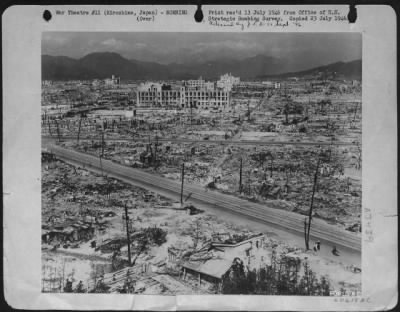
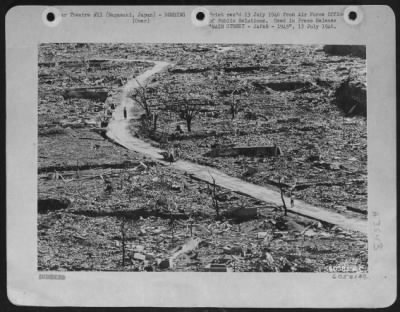
Some of the photos of the aftermath of the atomic bomb blasts at Hiroshima and Nagasaki have a similar effect:

Page 1; Black and White and Color Photographs of U.S. Air Force and Predecessor Agencies...
'View of Hiroshima taken from Red Cross hospital building about a mile from focal point of blast."

Page 1; Black and White and Color Photographs of U.S. Air Force and Predecessor Agencies...
Nagasaki: "A street through a formerly congested residential area... 1,000 ft. northeast of atom bomb burst."

Hopefully stories like Mr Yamaguchi's will be retold and remembered so that they will never be repeated.

January 5, 2010

The Tangled Tale of Topsy the Elephant

Yesterday marked the 97th anniversary of the electrocution of Topsy the elephant.

For those of you not familiar with Topsy's sad story...

Topsy was a domesticated elephant who, as a baby, was popular with children, but got into trouble later in life. Reports say that she, "killed two men in Texas and a third in Brooklyn borough after he had fed her a lighted cigaret."

Topsy was part of a circus at Coney Island's Luna Park and her owners decided that she should be put to sleep and that they could take advantage of the opportunity. They announced that she would be executed for murder and invited people to come see the spectacle.

The original plan seems to have been to hang Topsy, but either the American Society for the Prevention of Cruelty to Animals objected, or Topsy wouldn't walk out onto the gallows, or both, so a new plan was required.

At the time, Thomas Edison was busy trying to get people to adopt his Direct Current (DC) as the standard for electricity by electrocuting animals using the rival Alternating Current (AC) advocated by Nicola Tesla and Westinghouse. Topsy's case must have seemed the perfect opportunity for Edison and he proposed execution by electrocution.

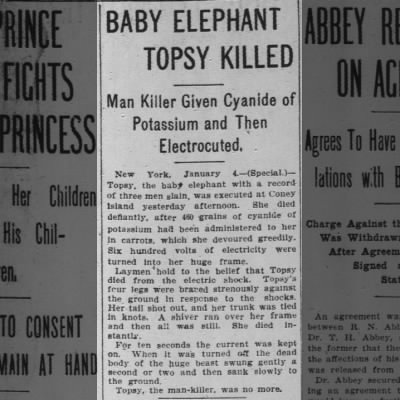
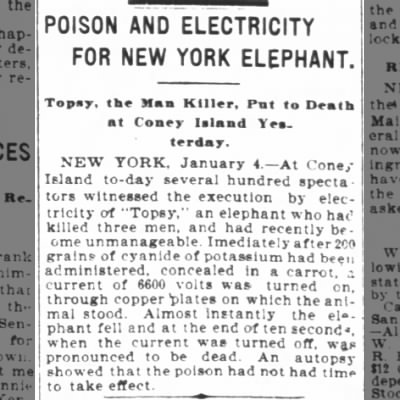
On January 4, 1903, Topsy was wired up, fed some poisoned carrots (just in case) and then had 6,600 volts of AC passed through her. Within seconds, as the Atlanta Constitution reported, "Topsy, the man-killer, was no more," but she became a national celebrity.

As many as 1,500 people witnessed the event and newspapers around the country reported it.
Baby Elephant Topsy Killed
The Atlanta Constitution

Poison and Electricity for New York Elephant
San Francisco Chronicle

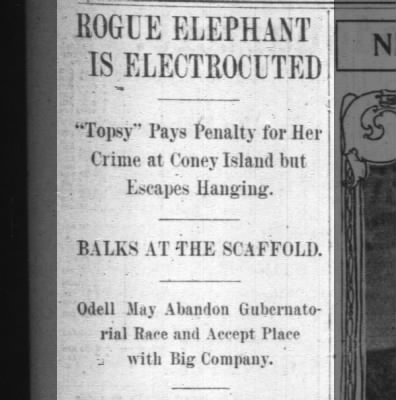
Rogue Elephant Is Electrocuted
Chicago Tribune

To help with his campaign, Edison filmed the event and showed the film to audiences around the country. Today, Edison's movie is available on YouTube:


You can learn more about Topsy on Wikipedia, from this article at Wired, or from this interesting webpage about Coney Island's Luna Park. Those with a darker sense of humor may enjoy the blog Topsy: the Electrocuted Elephant.

December 30, 2009

New Year's Art

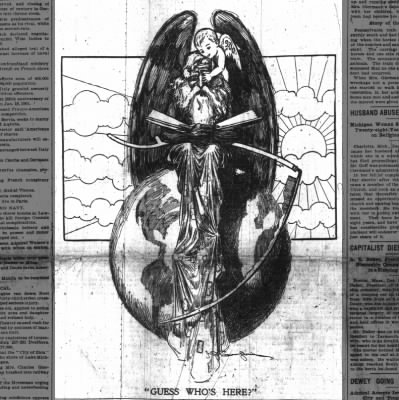
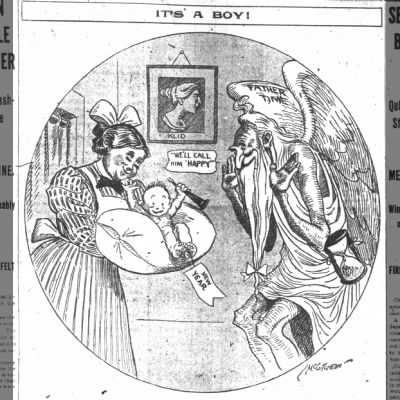
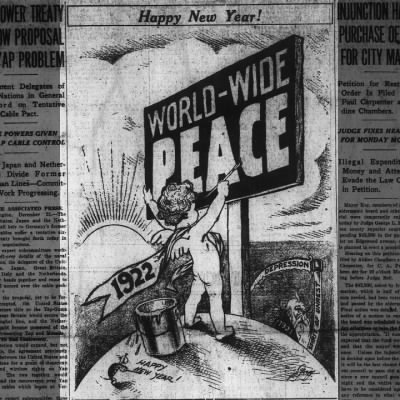
In preparation for the new year, I looked at some old newspapers to see what the front page held on January firsts past. In my brief survey, I found several treatments of the Old Father Time and the baby New Year theme:

Ringing in the New Decade - January 1, 1900
The Chicago Tribune 1 January 1900


The Chicago Tribune Rings in the New Year - 1911
The Chicago Tribune 1 January 1911


A Happy New Year 1922 - The Atlanta Constitution
The Atlanta Constitution 1 January 1922


Poughkeepsie Journal - New Years 1924 Edition
The Poughkeepsie Journal 1 January 1924

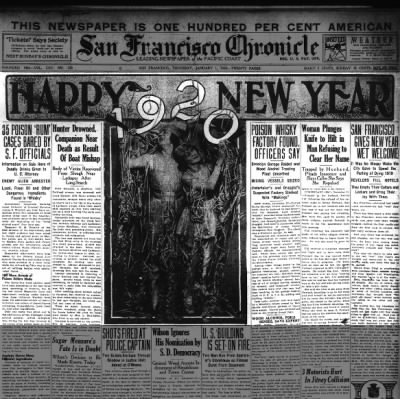
And then I came across this very odd image from the San Francisco Chronicle of 1 January 1920
Happy New Year 1920 from the San Francisco Chronicle
I'm not sure who these people are, but they seem happy about starting the 20s.

It was interesting to see the juxtaposition of the Happy New Year messages with the sensational and generally negative headlines on the front pages.

Most of the papers gathered stories of tragedy, murder and death from around the country to spice up the front page, which probably worked on most days, but seem a little out of place on a page with Happy New Year emblazoned across the top of it.

That 1920 San Francisco Chronicle is a good example. Headlines sharing the front page with the strange New Year's revelers include:
  • "35 Poison 'Rum' Cases Bared by S.F. Officials"
  • "Hunter Drowned, Companion Near Death as Result of Boat Mishap"
  • "Poison Whisky Factory Found, Officers Say"
  • "Woman Plunges Knife to Hilt in Man Refusing to Clear Her Name"
  • "Shots Fired at Police Captain"
  • "U.S. Building is Set on Fire"
  • "Four Scalded to Death in Steamer Explosion"
  • "3 Motorists Hurt in Jitney Collision"
  • "Four Women Shot by Baltimore Celebrants"
Happy New Year in deed. Here's hoping 2010 rings in on a better note.

December 7, 2009

Remembering Pearl Harbor

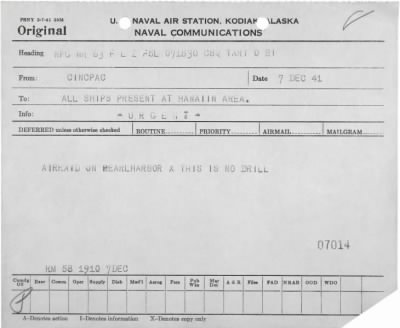
This urgent radiogram to "All ships present at Hawaiin Area" announced the December 7, 1941 attack on the US Pacific Fleet based in Pearl Harbor:
WWII Pearl Harbor attack radiogram

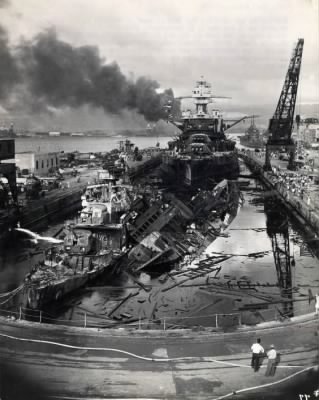
The surprise attack damaged all eight battleships anchored in the harbor and caused over 3,000 American casualties.
Pearl Harbor 13.JPG

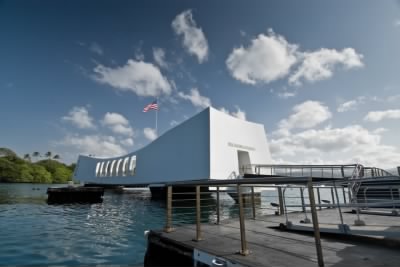
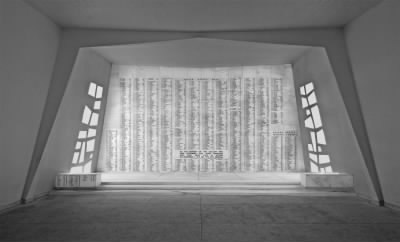
1,177 died on the USS Arizona and are remembered with a memorial that was built over the top of the still visible remains of the battleship which lies at the bottom of the harbor.
3.JPG

The memorial includes a wall with the names of those killed on the Arizona in 1941 and a place for those who have died since and had their remains "interred with their shipmates."
page; Pearl Harbor, USS Arizona Memorial

On Footnote, you'll find an interactive image of the memorial wall where you can learn more about those who died or if you have images or stories about someone whose name appears, you can add them.

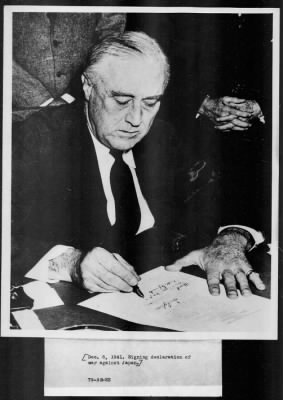
The day after the attack, President Franklin D Roosevelt delivered his famous "Day of Infamy" speech to Congress. In his speech, Roosevelt asked Congress to declare that, since the attack on Pearl Harbor, a state of war had existed between the United States and the Empire of Japan. You can hear the full six and a half minute speech on this Wikipedia page.

Within an hour of the speech, Congress passed a formal declaration of war which Roosevelt signed, bringing the United States into World War II.
Page 1; Selected Photographs of Franklin D. Roosevelt, 1913-1945


In honor of Pearl Harbor Day, Footnote is making their WWII collection free during December. You can read more on the Footnote Blog or see the World War II collection here.

December 4, 2009

The Gunboat Philadelphia

The National Museum of American History's website has this nice page about the Continental Gunboat Philadelphia.

The Gunboat Philadelphia is the oldest surviving American fighting vessel. Built in 1776, it was sunk in Lake Champlain during a naval battle with the British in the same year. The Continental Congress authorized the building of this 54 foot, 29-ton gunboat and eight other similar vessels for the defense of the Champlain Valley - the northern frontier of the colonies considered the key to the success or failure of the American Revolution. In the summer of 1776, under the leadership of the charismatic and controversial Brigadier General Benedict Arnold, Philadelphia and her sister-ships were hurriedly organized into what historians consider “the first American Navy.”
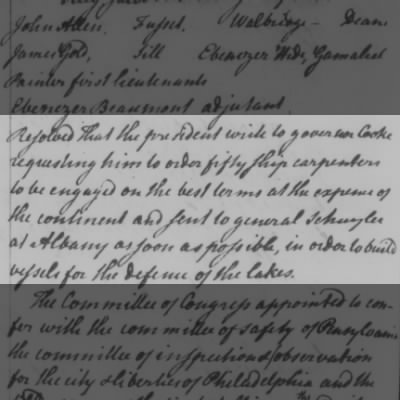
Here's the page from Transcript Journals of the Continental Congress (part of the Papers of the Continental Congress) where congress resolves, "that the president write to governor Cooke requesting him to order fifty ship carpenters to be engaged on the best terms at the expense of the continent and sent to general Schuyler at Albany as soon as possible, in order to build vessels for the defense of the lakes."
Continental Congress hires carpenters "to build vessels for the defense of

You can find some nice pictures of the Philadelphia here and more information about the history of the ship here.

December 3, 2009

UFO Sightings

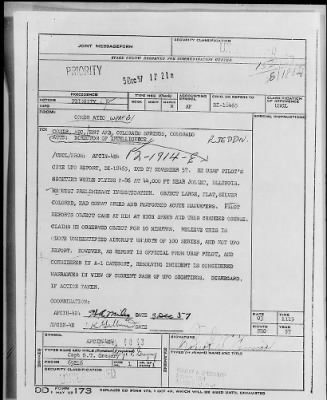
Today's Document of the Day from NARA is UFO report from the Project Blue Book files.

Here's the image on Footnote where you'll find the other 31 pages of the report:
Page 5; Project Blue Book, 1947-1969

Project Blue Book is full of interesting and mundane reports. Names of people reporting the sightings have been redacted, so you aren't likely to find out if your mother reported a flying saucer, but it's interesting to see the kinds of things that were reported, the way the government collected the data and in many cases, the way they explained the various sightings.

Here are a few other interesting reports from Project Blue Book.

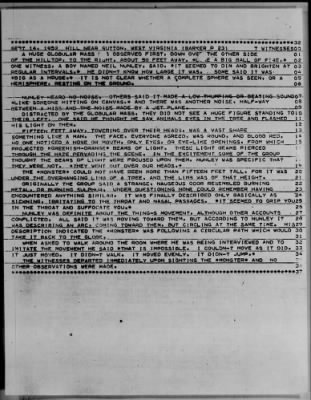
A first hand report of the Flat Woods Monster,
Page 17; Project Blue Book, 1947-1969

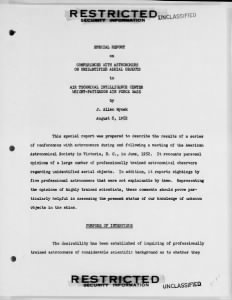
A "Special Report on Conferences with Astronomers on Unidentified Aerial Objects,"
Page 39; Project Blue Book, 1947-1969

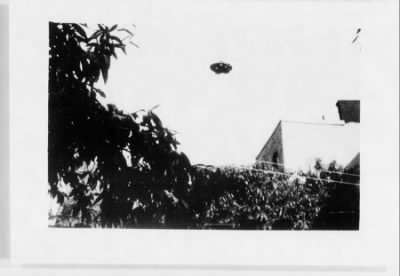
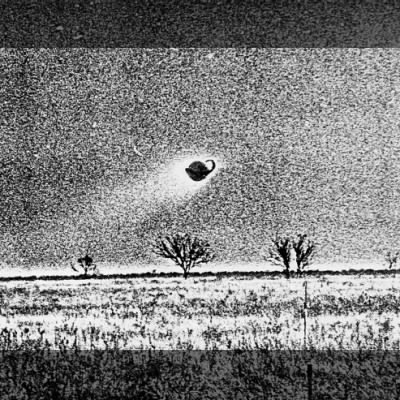
And the occasional picture of an unidentified flying object:
new york agosto 67

UFO or Photographic anomaly?

I don't know that you'll find proof of alien life in Project Blue Book, but looking for it can be a lot of fun.

December 2, 2009

Thanksgiving

I meant to post a few tidbits from the history of Thanksgiving last week, but I just never had the time. Here you go, a little late and hoping you had a nice holiday...

The Poughkeepsie Journal publishes President George Washington's declaration of "a Day of Public Thanksgiving and Prayer"
George Washington's Thanksgiving Proclamation - 1789

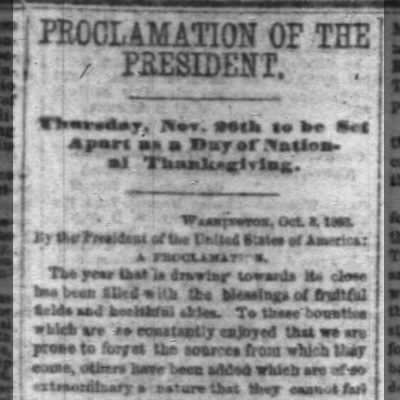
The Chicago Tribune prints President Abraham Lincoln's declaration of the last Thursday in November 1863 "as a day of Thanksgiving and Praise to our beneficent Father who dwelleth in the Heavens."
Proclamation of the President - Thanksgiving 1863

The December 27, 1941 Poughkeepsie Journal reports on President Franklin D Roosevelt (who in the years previous had moved Thanksgiving earlier to extend the Christmas shopping season) signing a law designating the fourth Thursday in November as Thanksgiving.
Thanksgiving Officially Returned to the Fourth Thursday

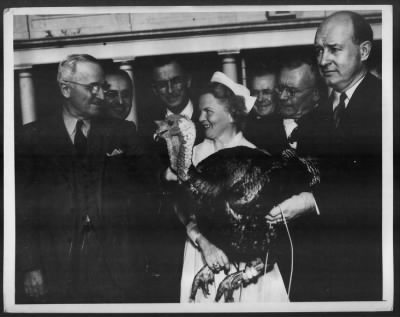
And here are some folks from the National Turkey Growers Association presenting President Harry Truman with a Thanksgiving turkey, November 16, 1949.
Page 52; Select List of Photographs of Harry S. Truman, 1885-1953

November 20, 2009

Using Revolutionary War Pension Files

A nice post on the NARAtions blog today discusses the value of pension files and links to an interesting example from Footnote.

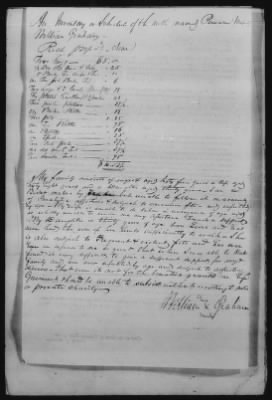
William Graham was 64 years old when he submitted this document in support of his Revolutionary War pension application in 1820. The pension laws in effect then required him to prove not only his service, but also his need for monetary support. The inventory seen here lists his personal property.

Page 8; Revolutionary War Pension and Bounty-Land Warrant Application Files

November 19, 2009

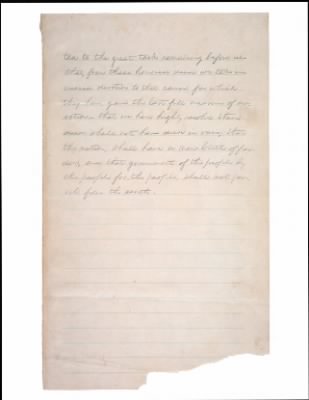
Remembering the Gettysburg Address

Today is the 146th anniversary of the Gettysburg Address.

This brief speech contains what may be Abraham Lincoln's most memorable mistake, "The world will little note, nor long remember what we say here."

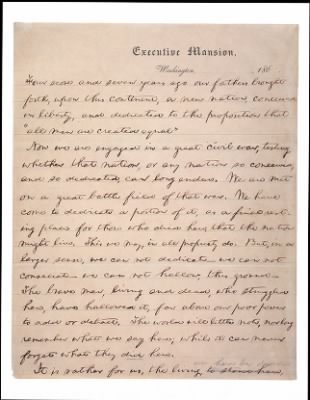
Page 1; American Milestone Documents

Page 2; American Milestone Documents


Here's my transcription of this early draft:
Four score and seven years ago our fathers brought forth, upon this continent, a new nation, conceived in liberty, and dedicated to the proposition that "all men are created equal."

Now we are engaged in a great civil war, testing whether that nation, or any nation so conceived and so dedicated, can long endure. We are met on a great battle field of that war. We have come to dedicate a portion of it, as a final resting place for those who died here, that the nation might live. This we may, in all propriety do. But, in a larger sense, we can not dedicate...we can not consecrate...we can not hallow this ground. The brave men, living and dead, who struggled here, have hallowed it, far above our poor power to add or detract. The world will little note, nor long remember what we say here, while it can never forget what they did here.

It is rather for us, the living, we here be dedicated to the great task remaining before us... that from these honored dead we take increased devotion to that cause for which they here, gave the last full measure of devotion—that we here highly resolve these dead shall not have died in vain, that this nation, shall have a new birth of freedom, and that government of the people, by the people, for the people, shall not perish from the earth.


It's interesting to compare this with the address Lincoln gave (here's the version on the Lincoln Memorial) and see how he worked through the details.